Showing posts with label best realtor in yucaipa. Show all posts

Thursday, October 8, 2015

How can I get my Real Estate offer accepted?

15 Strategies to getting your offer accepted!


The plight of today's buyers: "I'm just so tired of submitting offers that never get accepted!"

Are you making the wrong offer?  Are you working with an ineffective Realtor? Both?  I will stand by these words:  "If you're willing to write your very strongest offer (note that I didn't say 'highest' offer) the first time, and your Realtor is ethical, diligent, and thorough, you WILL have an offer accepted." Don't give up.

  1. The most outside the box strategy used to be the ONLY strategy.  Ask your Realtor to hand deliver your offer!  It's really easy to ignore an e-mail, phone call, or text message.  It's much harder to ignore a human being; one who's gone out of his or her way to hand deliver an offer.  Make sure your agents are going above and beyond.
  2. Do your best to truly understand the seller's motivation. Price isn't always king! Neither is cash; especially in short sale situations where the seller may stand to net zero out of the deal. Maybe the seller needs to find another property.  Maybe the sellers need to close immediately and are less concerned with proceeds.  Maybe the seller would like to do a three week rent-back after close of escrow to help accommodate the move?  Learn your sellers' motivating factors and you've won half of the battle.
  3. Demonstrate to the seller that you are not just willing, but able to close. Include bank statements, or Proof of Funds to Close with your offer. Pre-Approval, FICO scores, etc.  Your job is to give the sellers peace of mind that the transaction will close if they go with your offer.
  4. Offer the right price and back it up with Market Data. Sadly, many agents just don't have their head int he game.  Agent Bill is selling his Aunts house.  He's new.  Give him the market data necessary for him to go to the seller and show why your offer is the best offer.  "Look Aunt Mary!  See the market data?  This is a great offer.  I think you should accept it."  Done. 
  5. Offer your maximum down payment.  If you're writing an FHA offer, perhaps you can put 5% down rather than the typical 3.5%.  Writing Conventional? Can you put 25 or 30% down instead of 10 or 20%?  Make each element of your offer the strongest it can be. 
  6. Offer to close quickly. Ask you lender if he/she can perform quickly.  With all else the same, a buyer will typically accept the offer with the shortest time to close.  It shows your commitment and eagerness to perform. With lender laws and stipulations over disclosures getting more complicated by the week, securing an effective lender who's capable of performing on time is crucial. 
  7. Limit Contingencies with this caveat: Protect yourself first, aggressively pursue the property second.  A contingency on a contract may make a seller nervous. However, you may be able to shorten your inspection contingency period, from 17 days, to 15...or to 10.  If your agent is proactive, he/she may be able to line up inspectors in advance, thus not necessitating the entire 17 day contingency release period.
  8. Offer a Significant Earnest Money Deposit. This can be up to your entire down-payment.   Remember, it's not at risk until you release all contingencies, but it might show the seller a level of commitment that no other prospective buyers are willing to (or even thought to) show.
  9. Write a personal letter. Seriously! More often than not, there is a human being on the other side of this transaction. Expressing, in writing, why it's important that your offer is accepted may be the deciding factor. This is the "get off the pot" clause.  You may be spending a half a million dollars or more on a home.  Step up!  Put in the 12 minutes it might take to draft this letter, even it you have to do it 3 or 4 times.
  10. Offer a rent-back if needed. Sometimes people need time for their new escrow to close.  Sometimes their new home isn't done being built.  Communicate your willingness to be flexible if you're comfortable with it.
  11. If you don't NEED a seller's credit toward closing costs, don't ask. Buyers' Agents often ask for closing costs credits as strategy to help their buyers get into a home.  However, as a listing agent, why am I going to accept an offer requiring my sellers to hand over a portion of their proceeds if I have another offer that doesn't?  "But can't we raise the offer price to cover the additional credit?" Yes. But if you don't need to...don't.  Raising the offer price might push the contract price above the appraised value of the home, leading us all back to the negotiating table. 
  12. Submit an "As-Is" addendum. If you're willing to buy a property truly as is, let the sellers' know up front.  Add to your offer the fact that you're actually simply going to buy the home in its current condition, regardless of what turns up on inspection.
  13. Offer to put your money into escrow prior to approval on a short-sale offer. Showing the listing agent that you're willing to put your deposit money into escrow demonstrates yet another level of commitment. Remember: your funds are not at risk until you've removed all contingencies.
  14. Submit a back-up offer. Can't even find an "Active" property that suits your needs? To me, every property is active, even if it's not on the market at all.  Ask your Realtor to see if you might be able to submit a back-up offer even if MLS doesn't say you "can."  A simple call from one agent to another might plant a seed that turns into a smoothly closed escrow just weeks later.  Remember, if you don't ask...the answer is no.
  15. NEVER count out negotiation with a builder. Even if you don't "feel" that a new home is right, don't leave yourself in a position where you look back a year later and think, "Wow, we could have lived here!" Another caveat: Don't go into the builder's sales office unarmed.  Although I work with builders very, very often and have huge respect for virtually all of them, it costs you nothing to have your Realtor register you and to have him or her negotiate on your behalf.  Imagine if you could have a "Professional Auto Negotiator" with you when you buy your next car...at no extra charge!  That's the circumstance with builders.  Those of us who close many deals in new construction understand the process thoroughly; know what to watch out for; know what the builders might think is ridiculous; get the deals done. A Realtor's commission from the sale of a new home typically comes from the corporations ad budget, not from the price of the house.

" It doesn't take sharp eyes to see the sun and the moon, nor does it take sharp ears to hear the thunderclap. Wisdom is not obvious. You must see the subtle and notice the hidden to be victorious"
 ~ Sun Zu


My business thrives by word of mouth.  If you appreciate the information provided on my blog, please share this post on your favorite social media sites, and with anyone you feel could use my service.

Until next time.
 

Andy Blasquez  Cell ~ 909.539.3292
BRE#01826135
Please follow and share at YucaipaRealEstateTrends on Facebook

E-mail me on Andy.Blasquez@gmail.com

Monday, September 21, 2015

How to get my house ready to sell. 11 Points All Home Sellers Should Know

For many of us, when we think about selling our home, our goal is to walk away with the highest "Net Proceeds" (most money)!  This blog is designed to help you get there as simply, intelligently, and inexpensively as possible.

Some home sellers have other motivating factors; Getting top dollar for your home might not be the highest priority.  Perhaps you need to sell to accommodate a job transfer, or maybe you want to close escrow quickly so you can purchase another home that you've submitted a contingent offer on.  But in each of those cases wouldn't you also benefit from the best financial outcome?  My job as a listing agent and a real estate consultant is to guide and advise my clients on exactly how to safely, effectively, and efficiently get to that finish line...and to do it with a smile.

Throughout this post, notice how many times I also address what we're not doing.  I do this in an effort to show you another point of view.  We need to change our mindset from that of a home seller to that of a home buyer.  We want to think like a buyer; even think like our buyers' Realtors.  Taking this point of view from the very earliest possible moment will not only open the door for the very best offers to land on our desk, but it will also build the foundation for a smooth and seamless close of escrow.

Andy Blasquez Realtor in Redlands
Below, I've outlined a number of key steps that, when addressed intelligently and thoroughly, ought to result in the best possible outcome at closing time!  Some of the items are outlined in greater detail, but understand this; Any one of these elements might be the one that catches your buyer's eye. We won't know which one it is until we're in contract...so we've got to do 'em all!

1) Save your money.  Don't remodel for your buyer!
"Honey!  Don't you think that if we redo the kitchen we'll get a much higher sales price?"  This is such a common misconception.  The simple answer is to this question is, Yes.  However, the practical, bottom line answer is almost always a resounding NO!  You may put a stunning new, $40,000 kitchen into your home and find out that your sales price did, indeed go up up...by $30,000. THAT is no bueno!  In addition to the can of worms we often encounter throughout the remolding process, you've now netted a $10,000 loss.

I've been a paid consultant on nearly 75 flips with a large Northern California investment group.  If I could yell at the top of my lungs something I've learned throughout that process it's the fact that we will NEVER know what our buyer really wants!!  "Why not?"  Because we don't even know who our buyer is!


Paint + Hardware can really
dress up a kitchen for fractions
of the price of a remodel.
This doesn't come from real estate class, or a case study.  I've seen first hand, countless times, that a property was purchase, then updated and upgraded, only to hear at the very first open house, "Wow!  This is great!  If we just refinish the cabinets in white then put in that hardwood that we both love so much, this place would be perfect!"  Yes, they're already talking about ripping out the upgrades that you just installed.  It happens all the time.

"So what do we do to spruce up our kitchen?  It looks pretty sad." We spend a couple hundred bucks making it look twice as good as it does now.  Simply installing some new hardware or a refinish/re-staining goes a long way.  Then we let your buyer choose their new kitchen.  They're welcome to make those choices when the house is theirs.

"But what about the sales price? If we don't update the kitchen then it's not going to sell for as much as the one across the street!"  That right!  It's not.  The one across the street has a $40,000 kitchen upgrade. So...it sold for more than yours will. There!  Isn't it nice to be told the truth? Price your home appropriately and you'll leave room for your buyers to remodel at their convenience...after close of escrow.

Don't make more work for yourself. Unless you are a licensed contractor, you're never going to make your money back on your upgrades!  "But what about that couple on TV?  Flip or Flop!  They ALWAYS make money!"  You're absolutely right. They do.  Probably 95+% of the time.  However, Tarek and Christina El Moussa will tell you the same thing I I'll tell you: The first rule of flipping is that you make your money when you buy...not when you remodel.

2) Get a home inspection and a pest inspection:  
When you list your home for sale, you're actually listing your home...in its current condition...for sale.  Do you actually know the current condition of your home, or do you just think you know?  Do you know if the floor under the tile in the kids bathroom is in still in good condition? Do you know why that upstairs shower doesn't seem to drain as well as the others?  Think about it. The truth is that we aren't selling what we think you own.  We are selling what you actually own.  Are you curious to know what you actually own?  Then get your inspections done.

"Wait, what?  Me?  I don't want to pay for a home inspection!  Isn't it the buyer's duty to inspect anyway?  And heck...I have to disclose anything that turns up in the inspection, don't I?.  If I don't do inspections...I can't disclose what I don't know...right?"  Yes.  Both of those statements are true, and I know that for some readers this comes off as counter intuitive, but bear with me while we dig more deeply. This is (among others) where many Realtors and I just don't see eye to eye.  I've seen too many tears and too much aggravation to sit idly by waiting for the inevitable obstacle to derail my clients' transaction.  Inspections will help us discover the true condition of the home. The findings will either be clean...or important.  Both of those findings are equally important.

Knowing the condition of your home in the beginning all but guarantees that you won't be disappointed in the end.  You'll know what you're working with.  You'll know the truth.  You won't be sweating it out during that anxious "home inspection time-frame" after you accept an offer.  You'll also have a much better idea of the what proceeds we can expect from the sale because we'll know what we're actually selling. 
Bathroom Floor:  Water Damage?  A leak behind the wall?
Might be a huge problem!
Nope!  This is where the kids dropped their wet towels each day!
If there was a couple of quick fixes that would help not just secure the best offer, but facilitate the smoothest close of escrow...wouldn't you want to know what those are?  What do we need to do in order to show the home in its best light? Keep this in mind too:  Virtually all home buyers pay to have a home inspection and pest inspection done before their inspection time-frame expires. So, your buyers are going to discover  the true condition of the house and all of it's flaws. Then we inevitably wind up back to the negotiating table!  Wouldn't you rather know what's coming in advance, so you're best prepared to address it?  

"What if there is something catastrophic that is discovered through a home inspection or pest inspection? What if we can't event afford to make the repairs? Then we're stuck!"  Think it about this way: If you can't afford to make the repairs, does that mean that the the problem no longer exists?  Of course not!  The problem is real and we have real ways to address it.

"Oh man!  The roof has a leak and it's caused mold in the living room. You can see it right at the ceiling! We can't afford to fix the roof!"  You don't have to.

  • You could issue a credit to the buyer.  
  • You could drop the price of the house.  
  • You could find a roofer that will allow you to pay him through escrow so you don't have to come out of pocket.  
  • You can call your home owner's insurance. "What. What?  Call my homeowner's insurance rep for a leaking roof?"  Yep!  Did you know that in many cases damage caused from a leaking roof or faulty plumbing can be claimed on your homeowner's insurance?  
The point is that it's best to find the problem areas so we can address them in advance. Again, keep in mind that these 'discoveries' were either going to come from you...or from the buyer a few weeks down the road. Now that you know in advance about a couple of repairs that might need your attention, you can remedy whatever the circumstance is proactively...without the pressure of a contract over your head.

2 weeks, $10, and a bit of elbow grease
is all it takes to brighten up 
this dead, overgrown yard.
3) Maximize Curb Appeal:
Insert cliche here!  "You don't get a second chance for a first impression."  I want you to remove the following thought from your mind..... "Gosh, that doesn't look that bad!"
"It's not bad" isn't the level we want to hold ourselves to.  We won't know which element of the home will be the one that 'closes the deal' with your new buyers, so we need to make sure that each element shows at it's best. This starts with the first thing a buyer sees when they drive up to the property; the condition of the front yard and the front of the home, or what Realtors call "Curb Appeal."  
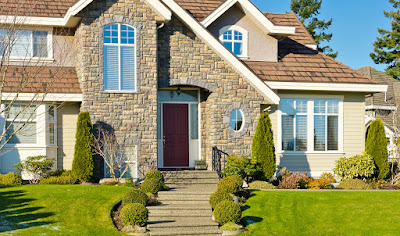
listing agent in yucaipa
There's nothing expensive about this landscape.  It's simple, bright, and vibrant.
Typically we know well in advance that we're going to be selling our home.  This is the time when we want to jump on the yard.  A little bit of fertilizer, some seed, some water, and some attention will take a yard from drab to dramatic.  Keep you lawn long and lush.  Keep your trees and shrubs neatly trimmed.  Keep bushes away from the siding of the house, and keep tree branches well clear from the roof.  Prune your shrubs so that they don't obstruct windows.  This accentuates the architecture from the outside, and brightens the rooms by letting the natural light in.  

Although it's not actually considered "Curb Appeal," use the same idea for the backyard and side yards.  Keep it simple, bright, and clean. Just don't neglect them. 

4) Start Packing:
Packing?  Yep!  Get on it!  We want your home to show clean, roomy, and inviting. If you're a typical American family, you've probably filled your home with...um...???...stuff!  We all have. Well, you're moving anyway...right?  You have to pack when you move, so why not start packing in advance?  Pack up everything (within reason) that's not necessary for day to day living over the next 75 days. Put it all in storage...or if your budget is tight, just neatly pack boxes into your garage and/or storage sheds. I've found "PODS" to be quite helpful.  This way you don't have to move your things twice.  Pack your things into Pods, then when you close escrow on your new home you have your Pods dropped into your new driveway.  

Pack it into your garage
if you have to.
Beyond decluttering your home, (is decluttering actually a word?) packing up your odds and ends makes each of your rooms feel bigger and more inviting.  Important too, is the fact that buyers typically don't care to see how your family lives in the house.  Yes, that means taking down that painting of Aunt Mable over the fireplace.  She'll forgive you.  She wants what's best for you too!  Depersonalizing the home will help prospective buyers visualize how they might add their own personal touches to their new home. 

Bedroom Closets, Bathroom Cabinets, Linen Closets, Pantries, etc. should ALL be decluttered.  Your closets should be no more than 60% full. Uncluttered closets and storage areas tell your buyer that a family is living here now, and they've got plenty of room.   

5) Clean, and I mean clean; DEEP CLEAN!:
I recently asked a client to have his home professionally deep cleaned before we actively marketed his property.  He wasn't sure what I meant. What I mean by deep clean is that virtually every inch of every surface of every room is cleaned, dusted, and/or polished. Yep!  Under that little spinning plate thingy in the microwave, baseboards scrubbed, ceiling fans dusted, furniture polished, windows cleaned...and screens too.  Think of it like selling your car.  If you want top dollar, you get it professionally detailed!  So how much did it cost to get your house 'professionally detailed'?  In this case, an army of experts deep cleaned his home for $350.   Too rich for your blood?  Then grab some rubber gloves and get to work.  Heck, a couple of phone calls, pizza, and some Diet Coke might motivate some extra elbow grease.  If not, at least you won't be hungry while you work. 

Clean, simple, and spacious.
6) Staging: 
"But I'm not a professional stager!"  Right; but you don't have to be!  Have you ever been to a retail store?  The Gap?  Macy's?  Pottery Barn?  There; that's a good start.  Use those stores as models to help you "Stage" your home for sale.  Pay attention to details.  Make each area look like you're trying to sell whatever is on display. Towels in your linen closet? Folded neatly; with like colors together.  Pictures on the bedside table? Make them few; sparse...or gone.  Try a lamp, a clock, and a book.  What about the closets in the bedrooms? Make 'em just like the racks at your favorite clothing store.  No...not Ross or K-Mart.  I'm talking Nordstrom.  If you "Stage" the items at your house as if you were selling them and you needed to get absolute top dollar...  Hey, wait!  You DO want to get top dollar, but not for your candles and blankets.  You want top dollar for your home, so pay attention to the smallest details and you'll put yourself in a position to reap the highest reward.  Oh yea.  One more thing.  Remember that old argument?  Toilet seat up or toilet seat down?  The answer is easy: Neither.  Close the toilet.  

7) Paint:
Crisp, clean, neutral, and inviting.
Do you want top dollar?  Then you're going to have to get dirty...or you're going to have to pay someone to do that for you. The "Frozen" themed room is great for your 8 year old daughter, but might look like a daunting task to a prospective buyer.  Worse than that is that they might see that room as "A girls room."  Taking away the idea that it could be a guest room, a boys room, even an office or den.  Let your your buyers decorate when they move in.  Let's give them a warm and inviting position to start from. Something clean, warm, and neutral has proven to yield the highest returns. Odds are, if you're home's been lived in, the walls are in worse condition than you might think.  Don't believe me?  Pull that bed; the one without the headboard, away from the wall.  Now go paint. 

"What about the outside?"  Here's where things can get into a gray area.  Painting the outside of your home can be quite costly.  However, with fresh paint on the outside of the home, home inspectors and potential buyers may see fresh paint as responsible ongoing maintenance. "If the eaves are maintained this thoroughly, I bet the rest of the home is too!"   So the topic of outside paint should be looked at on a case by case basis. 

Your List.
Your Time-frame.
8) Fix it:
What do I mean?  If it doesn't work the way it's supposed to work, fix it.  What's the main culprit? The rear sliding door.  It's just another trigger, negatively affecting the buyers' point of view. A stubborn rear slider might leave buyers thinking, "If the whole house was maintained the way the rear slider was...we should run!"  That middle bathroom is still missing the handle for the drain.  5 out of 9 lights in the chandelier are burned out. That drawer in the kitchen has come off the rails.  Closet doors don't open and close smoothly?  I could go on...and I don't even live there! 

None of these items are going to be expensive.  Not fixing them, however, could be. Remember point #2 of this blog post?  Get a home inspection.  The inspection report will leave you with an itemized list of items that you can tend to while you're preparing your home for sale.  Again, this is on your time, not your buyer's time.  

9) Downsize your furniture:
Just 'cuz you own it doesn't mean you have to display it! Keep it simple.
If you have large furniture items, you may want to move them out, especially if your home is limited on square footage.  A large, ten person sectional couch is fantastic in a large Great-Room, but in a 1,240 square foot home, it probably consumes more square footage than a buyer is going to want to concede. If you have the means to remove bulky items for smaller rooms, your home will show at its best. Beyond that, keep in mind, that in terms of staging, less is more.  

In this room I'd start by centering the room around the fireplace. I'd remove the love seat, remove the cards from the mantel, take out the TV and TV tray, and the painting above the TV.  I'd then arrange the two chairs and coffee table on one side of the room, with the lounge chaise on the other side. Ultimately, getting the most utility or usability out of the room with the least amount of furniture is what we're looking to accomplish.


Do it.
Just don't over do it.
10) Bring the outside in:
A one or two plants in the family room and maybe a couple of live herbs in the kitchen  and you're all set.  You don't need to have a green thumb, but if you can keep two or three potted plants alive for three or four weeks, you're in good shape.  If you absolutely love the atrium that you've turned your living area into over the past 7 years, great.  You can re-open it at your new home.  More than a few potted plants can make a home damp and musty on the inside.  We simply want two or three pops of color and freshness to brighten up the kitchen and family room.

11) Give each room a title:
"Here's the master bedroom, here's the den, and here's the game room" sounds better than "Here's the room where we keep all of our crap!"  If you've got that "extra" room full of "extra" stuff, you can guess where it should go.  That's right...pack it up!  Better yet, pack up 90% of it, and keep 10%.  The sewing machine and two dressers is now "our Craft Room". Look behind the clothes hanging in that room.  You might find a treadmill or and exercise bike.  Throw down a cheap Yoga mat and you've got an "Exercise Room". You get the point.  Each room gets a title.

As I mentioned at the top of the post, we'll never know which of these points are the most important until it's too late. So take the time, proactively, to show you house at it's very best.  

Thanks in advance for remembering my name when the topic of Real Estate comes up in conversation.  If you're local , just remember Andy@LoisLauer.Com I'm always here to help.  


My business thrives by word of mouth.  If you appreciate the information provided on my blog, please share this post on your favorite social media sites, and with anyone you feel could use my service.

Until next time. 


Andy Blasquez  Cell ~ 909.539.3292
BRE#01826135
Please follow and share at YucaipaRealEstateTrends on Facebook
E-mail me on Andy.Blasquez@gmail.com


Sunday, July 19, 2015

Real Estate Values in Yucaipa - 2nd Quarter of 2014 to 2nd Quarter of 2015

"So Mr. Realtor!  How's the Real Estate Market?"

Well...the facts don't lie, so let's look at the facts. Let's compare apples to apples...to apples.

First...let's take a quick look at the 2nd quarter of 2014 as compared to the 2nd quarter 2015.

Q2 - 2014: 144 homes sold with an average sale price of $313,723
Q2 - 2015: 154 homes sold with an average sale price of $319,116
That is a modest 2% increase in home prices.
Now, consider Q2 - 2013 when we saw 168 homes sold with an average price of just $278,623 and we'll see that from 2013 to 2014 Yucaipa showed nearly 13% growth in home values.

Why does this matter?

Most of the public is still expecting huge growth, but that's not happening right now.  Modest, real, sustainable growth is happening.  However, as a result of the prior year's exaggerated growth rate, many home sellers and their agents (who probably don't 'geek out' on market data like I do) believe that their homes are worth more than they actually are. As a result homes are often listed above market pricing and sell at market pricing, but below the original asking price.  Over the past 30 days alone, 65% of the homes sold in Yucaipa sold at a price lower than the original asking price.  That's 38 of the 58 homes sold actually sold for less than the asking price compared to only 10 which sold at asking and 10 which sold above asking.

And what do I want you to take from this?  Whether you're looking to buyer or sell, don't put so much weight into the asking price of a home.  Trust a real estate professional to run comps on a home you may be interested in. Make sure that they're putting much more weight into "Sold" data than they are into Active or Pending prices.  The "Sold"  price is a fact.  The "Asking" price is a wish.

As always, if you know someone who may be looking to buy or sell real estate, I'd love the opportunity to provide them with the very best service.  If you know folks in a area I don't personally serve, let me find an agent in their area of interest. I'll ask that agent some really tough questions in order to improve the chance that you're exclusively and meticulously represented by an ethical and professional Realtor.

Thanks in advance for remembering my name when the topic of Real Estate comes up in conversation.  If you're local , just remember Andy@LoisLauer.Com I'm always here to help.  

My business thrives by word of mouth.  If you appreciate the information provided on my blog, please share this post on your favorite social media sites, and with anyone you feel could use my service.

Until next time.


Andy Blasquez  Cell ~ 909.539.3292
BRE#01826135
Please follow and share at YucaipaRealEstateTrends on Facebook
E-mail me on Andy.Blasquez@gmail.com

Monday, June 8, 2015

A Simple Look at the Home Buying Process.

What does (or should) the home buying process look like?

Below is a Step-By-Step breakdown of a "typical" real estate transaction from a buyer’s point of view. Before I go on, however, it's important to know that ‘typical’ is a word I tend to run from.  I’ve closed hundreds of deals over the past 9 years, and if one thing stands true, it's the fact that each transaction is unique and brings with it its own challenges and rewards. 

Notice too, that I didn’t say that this is a ‘Day-By-Day’ breakdown of a real estate transaction. Buyers and sellers (and I) would love to know a day-by-day schedule, but that's just not realistic.  The number of days necessary to complete each stage, safely, effectively, and efficiently changes from one transaction to the next. With that out of the way, here we go!  

Think first about the lifestyle you want to lead,
then start your search.
  1. Find the best real estate agent you can. Find a Realtor that is going to advocate solely for you. Don't use an agent who's going to simply fill out paperwork in hopes that you and one of their other clients will meet at some arbitrary price that’s half way between what you want and what they want. Each team in the Superbowl has it's own coach.  Don't you deserve one too?
  2. Meet with your lender and establish your maximum budget as well as what type of financing you’ll be using.  The result of this meeting should be your Pre-Approval Letter.  This letter is your golden ticket.  It enables you to submit offers to sellers, expressing not just your interest and willingness to buy, but your ability to buy as well.
  3. Discuss your Needs, Wants, and Budget.  With whom? Your spouse? Your friend? Your Realtor? Your grandparents?  Yes to all of the above.  Each will have a different perspective and help. Keep in mind that what you “Need” is different from what you “Want”, and what you “Can afford” is different from what you “Should afford”.  
  4. View homes.  Much of this process can be done online, but there are benefits and pitfalls with
    using the internet to aid in home shopping.  The benefits of this is that you’re not spending days and weeks driving around from place to place when you can easily rule out 75% of active listings with a virtual tour.  A major pitfall is that anxious and eager buyers often depend on Zillow, Redfin, or Trulia type apps more then they depend on their Realtor.  Simply put, too much of the information on these apps is either inaccurate or outright wrong.  
  5. Submit the smartest and best offer you can. Notice I did not say the highest offer.  "Best" and "Highest" are not necessarily the same.
  6. Negotiate all of the terms of your contact.  Price, Time-frames, Contingencies, etc. if your real estate agent is a true pro, he or she may be able to learn the seller's motivating factors.  This is like know your opponents' cards in a game of poker.  
    Make sure that your wants don't come before your needs. Is your life glamorous, or is it practical? Can you afford both?
  7. Congratulations, our offer was accepted! Now, your contingency time-frames begin. Typically these would be inspections, appraisal, and loan contingencies.
  8. Tell your lender that you’re in contract so that he or she can start the necessary lending tasks. Appraisal is ordered by your lender.
  9. Investigate and inspect the property.  Unless you’re buying a brand new home, I always recommend having your home inspected by a professional home inspector and pest inspector.  Those professionals may suggest that you have additional inspections done as well: roof, foundation, pool, etc. These are not a condition of the agreement, but more of a security strategy.  You want to know what you're buying...not what they're selling!
  10. Discuss, draft, and submit a Request for Repairs, Addendum, or a Modification of Terms.
  11. Closing and Title activities are initiated.
  12. Order homeowners insurance.
  13. Verify that all agreed upon repairs are completed properly.
  14. Once you’re certain that repairs were completed properly, the appraisal came in at or above your purchase price, and your lender advises you to do so...it's time to remove all contingencies.  At this point you're all in, and going forward. Your earnest money deposit may be at risk if you back out.
  15. Sign loan and closing documents.
  16. Documents are reviewed for final loan approval.
  17. Your loan funds.
  18. Title of your home records with the county.
  19. You receive possession of (and keys to) your new home.
  20. Maintain access to the property you’re living in for at least a week after your proposed close date in case there are closing delays.


Thanks in advance for remembering my name when the topic of Real Estate comes up in conversation.  If you're local , just remember Andy@LoisLauer.Com I'm always here to help.  

My business thrives by word of mouth.  If you appreciate the information provided on my blog, please share this post on your favorite social media sites, and with anyone you feel could use my service.

Until next time.


Andy Blasquez  Cell ~ 909.539.3292
BRE#01826135
Please follow and share at YucaipaRealEstateTrends on Facebook
E-mail me on Andy.Blasquez@gmail.com

Thursday, May 14, 2015

Real Estate in Yucaipa; The Data Doesn't Lie!

"Oh...you're in Real Estate?  So how's the market?  It's good. Right?"   


If I had a nickle for every time I heard that remark...I'd be a rich man.  But, what is "Good"?  If you're an investor looking to snap up distressed properties for pennies on the dollar, you might think a down market is "Good". If you own a home and hope that the equity you're building becomes your retirement, an increase in home values is "Good".  Data, on it's own, isn't inherently good or bad.  It's just the truth.  So here's the simple truth. 

We're often inundated with News, but more often than not this news has nothing to do with us or where we live. For this post, I personally pulled this local, Yucaipa specific market data in an effort to give homeowners in Yucaipa accurate, concrete market information.  This is not my opinion.  It's not some random journalist out of Washington regurgitating someone else's ideas.  It's not good or bad.  It's just the truth.  

First, let's take a look at the general trends, then I'll point out a few items that I see as important with regard to home values in Yucaipa...and where things are headed in the near term.  
The above listed data is for Detached, Single Family Residences in Yucaipa, California only. 
There are several things I'd like to point out about the graph above.
  1. Red is (median) what people ASKED for their homes.  Blue is (median) what they actually received.
  2. The beginning of the graph illustrates a decrease in home values; the 'end' of the housing bust.
  3. In 2011 and beyond we see aggressive recovery of the local real estate market.
  4. When the market was "bad" people listed their homes more realistically.  The gap between Asking and Sold was closer. As the market increased...so did home sellers' optimism and aspirations.  Note the increase in the gap between the blue and the red as median home values increased.
  5. At NO point was the median asking price at or below the median sold price.  (sellers virtually always think their homes are worth more than they are.)
  6. If you had to forecast the where the blue curve was heading over the next 1 to 5 years where do you see it going?
Finally, below is the proof.  If you want to geek-out on data, the screenshots below show the criteria used to secure the data needed for the simple line graph above. 


I say and write this often, "Don't wonder! ASK!"  

Thanks in advance for remembering my name when the topic of Real Estate comes up in conversation.  If you're local , just remember Andy@LoisLauer.Com I'm always here to help.  


My business thrives by word of mouth.  If you appreciate the information provided on my blog, please share this post on your favorite social media sites, and with anyone you feel could use my service.

Until next time.


Andy Blasquez  Cell ~ 909.539.3292
BRE#01826135
Please follow and share at YucaipaRealEstateTrends on Facebook
E-mail me on Andy.Blasquez@gmail.com

Sunday, May 10, 2015

Honey!!! Stop the car!

Isn't home shopping fun?  Heck, my wife and I still love looking at open houses even though we're not in the market to buy right now. "Just browsing" is an exciting thing to do!  

We love seeing the upgrades, stealing new decorating ideas, and just being inspired to keep our home looking its best.  
Chapman Heights Real Estate Yucaipa
"Honey!  Stop the car!  I LOVE this neighborhood!  I'd love to live here!"
However, if you are actually in the market to buy a home, please take a moment to pause and think about this: Before you walk into that Open House, fall in love, then write your very best offer...stop. Stop for just 30 seconds and think.  Who does the agent holding the home open work for?  Does he or she work for you, or does he or she actually have a fiduciary responsibility to the sellers? Below is a statement taken directly from the National Association of Realtor's website, briefly touching on the fiduciary duties of Realtors.
The image above is taken directly from the National Association of Realtor's website.
Now that you've paused and put a little distance between the emotion of the moment and making intelligent decisions for your future, simply ask the agent this question.  "So...is this your listing?"  If the agent says, "No!" then there's no reason (taking for granted that they're experienced and effective) not to use that agent.  If the agent holding the Open House says "Yes.", then his or her loyalty goes first to the home sellers.  The agent is representing, protecting, and negotiating on behalf of the home sellers.  How can he or she give you that same level of service?

Look at it this way for a minute.  When you walk into the Ford dealership and you're going to spend $40,000 on a new SUV, you know that the salespeople works for Ford.  They represent Ford and Ford's interest.  The same holds true for a listing agents.  He or she represent the sellers and the sellers' interests.  If that agent tells you that they can advocate and negotiate for each of you equally...is that agent actually, ethically representing the sellers?  Meeting in the middle is NOT negotiating.

So what should you do?  Simply walk away and call another Realtor; a local area expert who does NOT have an ethical and professional loyalty to another party.  Go ahead.  Look at the property. Grab a flier. Fall in love with the place.  Even decide you want to buy it.  But don't move forward until you have someone in your corner, representing you, exclusively.

Click here to read the Realtor's fiduciary duties directly from the National Association of Realtors website.

Yes.  I too hold Open Houses.  In fact, its one of my favorite parts of my job.  That said, whenever possible, I hold a colleague's listing open, and I make that known as soon as folks walk through the door.  "Hi!  I'm Andy.  This is not my listing.  It's in the capable hands of one of my colleagues.  I, however, would love to exclusively represent YOU in the event that you like what you see."

I believe that the home buying process will be safer, more effective, and more efficient with your own Realtor on your team!

I say and write this often, "Don't wonder! ASK!"  

Thanks in advance for remembering my name when the topic of Real Estate comes up in conversation.  If you're local , just remember Andy@LoisLauer.Com I'm always here to help.  


My business thrives by word of mouth.  If you appreciate the information provided on my blog, please share this post on your favorite social media sites, and with anyone you feel could use my service.

Until next time.


Andy Blasquez  Cell ~ 909.539.3292
BRE#01826135
Please follow and share at YucaipaRealEstateTrends on Facebook
E-mail me on Andy.Blasquez@gmail.com

Tuesday, March 24, 2015

10 Painful and Costly Mistakes Home Buyers Often Make


  1. Don't use your "Aunt Mabel".
    • Although your friend or family member will surely have your best interest at heart, without an intimate understanding of current, local market trends, you're either going to struggle...or pay too much.  Neither of which is ideal.  Use an established and respected local area expert. Why? They get the job done; repeatedly.  They know what's out there and they know what's coming.  They also have established working relationships with the other players in the mix: Title, escrow, lenders, other agents, etc.
  2. Remember, until it's yours...it's only sticks & bricks.
    • Until you get the keys, do your very best to remember that the deal you're working on is literally just a stack of raw materials and labor.  Don't go order your new sofa or that 80" HDTV. Until it's actually yours, believing otherwise often leads to headaches and heartaches.  
  3. Not doing recommended inspections.
    • There are typically only two circumstances when I'll subscribe to the idea of 'no home or pest inspections'.  A) New Construction. B) When the buyers have the ability and willingness to recover from unexpected problems with the property; mold, plumbing, electrical, foundation, roof, etc.  These inspections are crucial in making an informed decision as to whether you proceed with a purchase, walk away...or renegotiate terms of your contract.  "But what if we pay for these inspections and find out that we don't want to buy the home?"  THAT, my friends, is exactly why you do the inspections.  Better a $275 risk...than a $475,000 risk.
  4. NEVER change your financial circumstances while in escrow. 
    • Don't pay more, borrow more, sell something, buy something, or make an investment...and please...don't guy buy a new car! "But I thought paying off my credit card debt would be helpful!"  Don't think; ask!  It might be helpful.  It might have been better, though, to have used those funds to buy down your interest rates. So, if you're going to do anything other than buy groceries (exaggerated...but just a little bit) while you're in escrow, tell your lender immediately.  Better than that, ASK your lender.  I promise that you don't want to be stuck in a contract that you cannot close.  It's no bueno! 
  5. Don't leave yourself Mortgage Broke
    • Mortgage Broke is when you can comfortably afford your mortgage payment...but nothing else.  No baseball games, no Disneyland trip, no back to school clothes, and no new tires for the car.  Most Americans have an almost unquenchable material appetite. In a funny way, we want to WANT as much as we want to HAVE.  So, just because you're approved to a loan amount of $600,000 doesn't mean that you HAVE TO buy a $600,000 home.  It's your home...not your life.  Make sure that you're comfortable enough to absorb a few financial hits along the road and smile through them.  Enjoy that occasional ski trip.  Take a weekend away, now and then.  Leave just enough breathing room to keep you 'in love' with your home, not burdened by it. 
  6. Negotiating with home builders on your own.
    • Most home buyers would never consider taking their real estate agent into a new home community.  Over the past 4 years, nearly 25% of my business has been the result of successful negotiations with home builders on behalf of clients.  Think about it for a minute.  Imagine if you and your spouse could walk into a new car showroom with YOUR OWN car salesman to help you negotiate.  Seriously!  This guys know what goes on behind the scenes.  Next, imagine that his or her service was free AND did not raise the price of the car you were going to buy!  It's the same way with new home construction.  You CAN bring help.  As your agent, yes, I do get paid, but those funds typically come from the builder's advertising budget, not the sales price of your house.  I learned this early, watching a Realtor who I know and love negotiated terms on my first new house.  It was fantastic.  Click here to read more. 
  7. Know your lender.
    • Some random "WannaBuyAHouse.Com" loan website probably isn't the most ideal relationship to foster when your financial future is at stake.  Find a local lender that you can speak with in person, on the phone, via text, or however you prefer.  This person is far more likely to invest time and some serious effort into someone they've personally met.  Are the employees on the other end of some website interface going to be busting their butts for someone they've never even met?  You can't be sure.  So drop into your bank or credit union.  Even better than that would be to work directly with a lender that already has a strong working relationship with your real estate agent.
  8. Don't expect that fun new iPhone app to turn you into the local area expert.  
    • This has become such a problem within our industry that I already wrote an in depth post about it.  Zillow, RedFin, Trulia, etc. are great if you're looking for a reasonable rule-of-thumb, but as they admit themselves...their data is questionable at best.  Count on your local area expert. He or she knows not just what the price of your new home ought to be...but WHY it ought to be sold at that price.  That expertise; that "why" is crucial when it comes to negotiating a fair price and fair terms.
  9. Don't use the wrong "coach."
    • Do you know why there were two coaches in the Superbowl this year...and every single other year since the beginning of time?  Because there were two teams; two sides. OK, I know what you're thinking..."Duh!"  But every single weekend, unsuspecting home buyers walk into an open house and tell the listing agent, 'We love it!  Let's write it up!" That's no different than the Patriots marching into the Seahawk's stadium and asking their opponents coach to help them gain the best possible outcome.  It happens all the time.  So what should you do if you do fall in love with that open house?  First, ask if the agent holding the home open is working for the sellers.  Sometimes they're not! If the agent at the open house is working for the sellers, say this, "We absolutely love it!  We're going to go have our agent run comps and write up a competitive offer." Then leave. Find an impartial real estate agent that will advocate or coach your side exclusively. The listing agent has a fiduciary responsibility to the seller. Let someone else advocate for solely you!  
  10. Unless your purchase is going to be a rental, make this your home, not just an 'investment'. 
    • It's easier said than done, but consider your purchase for what it is; your home.  It may go up in value. It may go down in value. But it will always be your home; at least until you sell it, or will it away! Creating a bit of emotional separation between the idea of investment and home will leave you feeling more peaceful throughout the ups and downs of the real estate market.
There are dozens of other do's and don'ts to keep in mind when buying and selling a home, but I hope that these ideas leave you a bit better equipped to confidently walk the path of buying your next home.

Thanks in advance for remembering my name when the topic of Real Estate comes up in conversation.  If you're local , just remember Andy@LoisLauer.Com I'm always here to help.  

My business thrives by word of mouth.  If you appreciate the information provided on my blog, please share this post on your favorite social media sites, and with anyone you feel could use my service.

Until next time.


Andy Blasquez  
Cell ~ 909.539.3292
BRE#01826135
Please follow and share at YucaipaRealEstateTrends on Facebook
E-mail me on Andy.Blasquez@gmail.com