Showing posts with label Realtor in Redlands. Show all posts

Thursday, March 2, 2017

Buying a home shouldn't be so dang scary!

Buying real estate is exciting and terrifying all at the same time.
Buying a home doesn't have to be like a horror movie.
Sometimes simply knowing what to expect...even knowing the worst case scenario will make the entire process less daunting.  Initially, this post may come off as a huge plug for Loan Officers...and I'm not a Loan Officer.  However, initially...that's where the whole thing starts.

Below are a number of common questions that prospective home buyers ask...or...are afraid to ask.

  1. Where do I start? ~ Make a new friend: Your Lender. I've said it countless times: "Stop wondering, and start asking." Your lender isn't the 'bad guy." He or she is a, dare I say, far more important part of the purchase of a home than your real estate agent. Yes, your agent needs to watch out for hidden obstacles, and will protect you throughout the home buying process. But without an effective loan officer, you're dead in the water. Pull together a couple of bank statements and your W-2s, and you'll be walking away with your Pre-Approval letter!
  2. Typically, what credit score and income level do I need to qualify for a home loan? ~ Answer #1: Ask your lender.  Policies change.  Answer #2: Typically 620 or more will get the job done nicely.
  3. Are there loan programs or grants that I might benefit from? ~ YES! With the fear of sounding like a broken record, I'll advise you to ask your lender. There are grants, 0% down programs, First Time Buyer programs, VA/FHA loan programs, etc. 
  4. How much do I have to put down; my downpayment?  20%, 10%, 5%, 0% Absolutely. Some buyers put down 100%.  Most of us, however, aren't cash buyers.  Maybe you can afford to put $80,000 down on your home, but you may opt to put down only $40,000, saving the other $40,000 for updates and upgrades!  Maybe you can put ZERO down. Your lender can provide various payment options based on your resources and your qualifications. Ultimately it depends on your position, your needs, your wants, and your budget.
  5. Are there additional costs involved in buying a home? Yes there are.  There are often loan origination fees, escrow fees, title fees and title insurance, etc. Typically, in my experience, closing costs run +/- 3% of the purchase price of the house.  For example, on a $300,000 home, your closing costs will typically run around $9-10 thousand dollars.  However, if coming up with closing costs is going to be a deal breaker, the seller may help! Depending on the market, buyers can ask home sellers if they're willing to help with closing costs, up to even asking for ALL closing costs to be paid.  If the offer is strong enough, the sellers' answer is more often than not...YES.
  6. How long does it take to buy a home? ~ Sarcastic, yet accurate response: The whole time! Seriously though, typically you can count on 45 to 60 days from looking to owning. It probably won't take more than two weeks to find your home and to get into contract. After that, it's 45 to 60 days.
  7. What does my Realtor do? ~ A quality real estate agent will, first and foremost, keep you safe. Anyone can find a home.  Your Realtor ought to, before you find your home, ask the intelligent, lifestyle related questions that will help get to the truth; your actual needs and wants, as opposed to what you 'think' you want or need. They'll negotiate the terms of the purchase contract. They will then guide you, safely and wisely, through the inspection process. Ultimately, they'll oversee the entire escrow process, leaving you with your new keys...and a smile.
  8. How much do I have to pay my Realtor? ~ Nothing.  Currently, in the state of California, the home sellers pay both brokers' commissions (which is where the real estate agent gets their paycheck).  How nice is that?
  9. What are the most difficult or nerve racking parts of the home buying process? ~ In a typical transaction, the Physical Contingency Time Frame is a bit stressful.  That said, I often tell my clients, "It's only sticks and bricks until it's yours. Lets make sure you still want it after the experts kick the proverbial tires and look under the hood!" Home Inspection, Pest Inspection, any any other inspection can be a stressful time frame for both parties, but it's a necessary process if you want to protect yourself.  Another stressful time can be waiting on the appraisal. An appraisal NOT "coming in" at the value you wanted, or a home's value not matching the contract price can be a mixed blessing.  As often as not this is a worry that we really don't need to worry about. 
  10. Is there anything else I should know before I go too much farther? ~ Yes!  Let the experts be the experts.  You will become an integral part of a massive team of experts. In typical order, it will look like this. Lender, Realtor, Escrow Officer, Title Officer, Inspectors (2 or more), and Contractors. I always advise my clients to  "Let the experts be experts." They know what to do better than we do.  
Until next time.


Andy Blasquez  Cell ~ 909.539.3292
BRE#01826135
E-mail me on Andy.Blasquez@gmail.com


Monday, September 14, 2015

Is this a good time to sell my house?

If I had a buck for each time I was asked that question,  I'd be lookin' at an early retirement.  It's a simple question, but the answer never is.

The best answer I can initially provide isn't actually an answer at all.  I need to start by asking another seemingly simple question: "Why do you want to sell?"

Strategically asking guiding questions in order to arrive at the sellers' motivating factors is the first best thing I can do for my clients.

Follow this real-life example taken from a recent interaction at an open house:
    Victorian Homes in Redlands.
  • Me - So you're looking to sell your home.  Is it your primary residence?
  • Client - Yes it is.
  • Me - If you list you home for sale right now, is your intention to find another home locally, or are you moving out of the area? 
  • Client - We would like to buy another home in a nearby community.
  • Me - Are you looking for something bigger? Smaller?  Something similar, but in  a different neighborhood?  Ideally, where would you like to be?
  • Client - Well, our kids have all moved out, at least for now, so we'd like to downsize a bit and simplify our lives.  We like the south side of Redlands.
  • Me -  Hmmm.  South side?  Are you looking toward a vintage/turn of the century style home?  If so, I'm not certain that those homes would actually result in 'simplifying' your life.  Downsizing, yes.  But many of those homes were built in the late 1800s and early 1900s and some will require substantial restoration efforts which can be both costly and time consuming.  
  • Client - Exactly!  That's what we're hoping to find.  My husband is quite the handyman and we'd love the opportunity to restore one of the old Victorian style homes in that area.  It's really been a dream of ours for what seems like forever!
  • Me - OK, now we're getting somewhere.  So if I found you the right place in Redlands; a place you could restore and bring back some its original charm, would you want to live in the home during the restoration process?
  • Client - Well...not ideally, I guess. Now that you mention it, it might not be very convenient living there when we're ripping the place apart!
  • Me - Do you have the means to purchase and restore this new property without having to sell your primary residence?  If so, living in your current home while you're restoring your new property would ensure both a quicker restoration time-frame as well as a more comfortable one!  If at all possible, I'd suggest holding off on selling your current home (Yes, I advised a prospective client NOT to list their home for sale) until you're about 6 to 8 weeks out from moving into the home you're going to restore!  This strategy leaves you the option to sell your primary residence... a) when you're ready to. b) when you can capitalize on an expanding market. or c) if you find that you need proceeds from the sale of the home in order to continue restoration of your new property. Does holding off on listing your current home sound like a plan that you guys could work with, or would you be more comfortable wrapping up one property before you start on another?  Either option is OK with me.
Note the subtle underlying message that I believe shines a light on my commitment to my clients best interest before mine: a characteristic not typically seen within the real estate industry.  In this example, I actually advised my clients to postpone the sale of their primary residence.  I'm postponing my own income; actually foregoing guaranteed income, with faith that by best serving my clients, I'll earn more in the long run, and sleep better in the process.

Here are a few other questions that I might ask in order to answer the "simple" question, "Is this a good time to buy or sell a house?"
  • Will you be replacing your home with another or are you simply selling off an asset?
  • Are you looking to up-size or down-size?
  • Are you leaving the area?  If so...where are you going?
  • Is your home a rental property? If so, have you considered a 1031 tax deferred exchange?
  • Do you have positive equity in your property?  If so...how much?
  • If you owe more than the value of your home, have you endured a hardship that would qualify you for a short-sale or short-pay transaction?
  • Are you going to sell no matter what, or will you only sell if you receive a certain price or certain net proceed/profit?
  • If you need to receive a certain price level, are you prepared to put in the time, effort, and/or funds necessary to fetch the very highest price for your home?
  • If you're looking to buy an "income property" or "Lease/Rental property," have you been a landlord already?  If not, do you qualify to hold both mortgages without the consideration of possible lease income?
After we have answers to the questions above, we'll need to collect market data sufficient to get a clear and accurate understanding about short term and long term local market trends.
Is the real estate market inproving
Click on the image for an up-close look at market trends.  You can see that, in Yucaipa, the median home price for a single family home was the same in August of 2010 as it was in August of 2015, If I had a crystal ball I'd have bought in September of 2011 and sold in February of 2014!  Where do you think the market is going now? Will it continue down as it has in the short run, or will it turn back up following the longer term trend over the past 6 years?
A "good" time to sell is a direct function of these trends.  Local market trends are virtually never what you hear on your local news channel.  In fact, not long ago I saw the Northern California market show a 24% decrease in median home prices while another market only 16 miles away increased by nearly 1%.  Your national or local news can't possibly accurately report on each individual market's condition, but your local area Realtor can.

Although the video below has time sensitive market information, the spirit of the underlying question is addressed in a more practical way than relying solely on the numbers.


I hope you took something helpful away from this post.  If you have a question that you'd like to see answered on this blog or in a video, please drop me a line and let me know.  If you're curious...you can bet there are many more who are wondering the same thing!

Thanks in advance for remembering my name when the topic of Real Estate comes up in conversation.  If you're local , just remember Andy@LoisLauer.Com I'm always here to help.  


My business thrives by word of mouth.  If you appreciate the information provided on my blog, please share this post on your favorite social media sites, and with anyone you feel could use my service.

Until next time.


Andy Blasquez  Cell ~ 909.539.3292
BRE#01826135
Please follow and share at YucaipaRealEstateTrends on Facebook
E-mail me on Andy.Blasquez@gmail.com

Sunday, July 19, 2015

Should I Buy a New Home, or a Previously Owned Home?

This question's an easy one to answer:  It depends!  See!  Pretty easy!


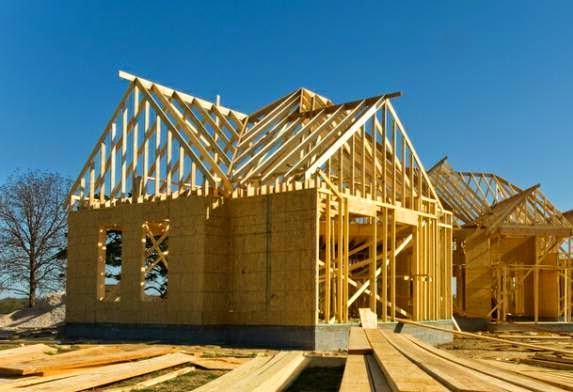
Ok, all kidding aside, I'm a huge advocate for new construction.  My wife and I have owned 3 homes over the past 12 years. Two of those were new construction.  That shows my personal taste. However, there's always two sides to the story. You can't buy a new, 1907 Victorian home in Redlands.  You'd be hard pressed to find a brand new home in a neighborhood with 90 year old oak trees. You probably aren't going to find a new home in Yucaipa on a half acre lot.  For me, this question points directly back the the first question you should ask yourself: "What lifestyle do I want to live, and can I do it here?"

Here is a list of reasons that might compel you to buy a brand new home as opposed to one that is pre-owned.

  • Choice! With little to no change in sales price, new home builders often offer choices as to color and styles of the features of your home. No, these aren't upgrades, but they're still choices. Carpet color, tile, vinyl, counters, cabinets, etc.  You'll often have 3 or 4 choices in each category to choose from at no extra cost.  
  • Flexibility! Builders often use their own lenders, which gives me, as your agent, several opportunities to negotiate: 
    • 1) The price of the home. 
    • 2) The terms of the loan.
    • 3) Closing Cost Credits
    • 4) Design Center Credits
  • It's New! In my family, we had little-ones crawling and rolling around on the floors. It brought us peace of mind knowing that not just the carpet was new (and in a color we loved)...but the carpet pads and sub-flooring was new as well.  No smokers, no pets, no allergies, and no spills that are going to resurface 4 months down the road.
  • Less Competition! Typically you're not going to compete with several other buyers for the same house, like you would on an existing home found on your Realtor's MLS. You'll likely have the choice of many new homes and models, or even the same floor plan on a different lot.
  • Infrastructure!  When you buy a 35 year old home, you've got 35 year old...everything else...attached.  Infrastructure: In new home communities, you've typically get new sewers, streets, lights, schools, shopping, and more.  
  • No Inspections! Ahhh...the dreaded home inspection!  Everything is new!  What's to inspect?  With pre-owned homes, you've got those anxious days between the time you write an offer and the time you receive your pest and home inspections.  New home construction practically allows you to skip this step altogether.
  • No Appraisals!  Yes, your new home must appraise in order for a lender to fund, even on new construction.  That said, it behooves the builder to price their homes accordingly.  Have I seen a new home NOT appraise for the purchase price?  Yes...once.  In that case, the builder simply reduced the price to the appraised value.  
  • FHA & VA Buyers Welcome! Virtually all home builders will sell to FHA and VA buyers!  These buyers are typically well qualified and committed to the process.  
  • Don't need an additional Home Warranty! It comes with one!  Wait...it comes with several: Foundation, Roof, Finish, Appliances...everything!
  • Who's standing behind your purchase? You've got a builder's reputation at stake, and they'll stand behind you.  With pre-owned homes...the seller's likely moved on, and you'll never see or hear from them again.
I could easily create a list that's just as long and just as compelling advocating the purchase of pre-owned homes.  In fact, I'm sure I will.  But at this point in my personal life, and with a young family in tow, I feel very peaceful living in a newly constructed home and I'm always at peace when I help a client negotiate a deal with a local home builder.

Wait!  You mean...I help people negotiate deals with home builders?
Absolutely!  Countless times! Really, at this point I couldn't guess how many times. Often enough, in fact, that periodically simply accompanying my clients on their first visit to a builder's model homes pays huge dividends to the buyers. If I accompany a buyer to a builder's sales office, it often allows me the ability to negotiate on their behalf. I've negotiated upgrades, closing cost credits, appliances...even fully landscaped backyards...at no extra cost to the buyer.  But wait, do I get paid a commission?  Yes!  Well technically no. It's customary that the seller of a home pays both sides commissions.  In the case of virtually all new home communities, they aren't going to pay a commission.  They pay a marketing expense; a referral fee.  This is not a line item on your closing statement.  It doesn't come from the sale of the home.  It's paid by a different department all together.  Often the same one that pays for TV commercials, web presence, and print advertisements.  This mean that a) you do pay me, and b) I'm absolutely committed to giving you the very best service possible and negotiating aggressively and effectively on your behalf.
Thanks in advance for remembering my name when the topic of Real Estate comes up in conversation.  If you're local , just remember Andy@LoisLauer.Com I'm always here to help.  


My business thrives by word of mouth.  If you appreciate the information provided on my blog, please share this post on your favorite social media sites, and with anyone you feel could use my service.

Until next time.


Andy Blasquez  Cell ~ 909.539.3292
BRE#01826135
Please follow and share at YucaipaRealEstateTrends on Facebook
E-mail me on Andy.Blasquez@gmail.com

Monday, June 8, 2015

A Simple Look at the Home Buying Process.

What does (or should) the home buying process look like?

Below is a Step-By-Step breakdown of a "typical" real estate transaction from a buyer’s point of view. Before I go on, however, it's important to know that ‘typical’ is a word I tend to run from.  I’ve closed hundreds of deals over the past 9 years, and if one thing stands true, it's the fact that each transaction is unique and brings with it its own challenges and rewards. 

Notice too, that I didn’t say that this is a ‘Day-By-Day’ breakdown of a real estate transaction. Buyers and sellers (and I) would love to know a day-by-day schedule, but that's just not realistic.  The number of days necessary to complete each stage, safely, effectively, and efficiently changes from one transaction to the next. With that out of the way, here we go!  

Think first about the lifestyle you want to lead,
then start your search.
  1. Find the best real estate agent you can. Find a Realtor that is going to advocate solely for you. Don't use an agent who's going to simply fill out paperwork in hopes that you and one of their other clients will meet at some arbitrary price that’s half way between what you want and what they want. Each team in the Superbowl has it's own coach.  Don't you deserve one too?
  2. Meet with your lender and establish your maximum budget as well as what type of financing you’ll be using.  The result of this meeting should be your Pre-Approval Letter.  This letter is your golden ticket.  It enables you to submit offers to sellers, expressing not just your interest and willingness to buy, but your ability to buy as well.
  3. Discuss your Needs, Wants, and Budget.  With whom? Your spouse? Your friend? Your Realtor? Your grandparents?  Yes to all of the above.  Each will have a different perspective and help. Keep in mind that what you “Need” is different from what you “Want”, and what you “Can afford” is different from what you “Should afford”.  
  4. View homes.  Much of this process can be done online, but there are benefits and pitfalls with
    using the internet to aid in home shopping.  The benefits of this is that you’re not spending days and weeks driving around from place to place when you can easily rule out 75% of active listings with a virtual tour.  A major pitfall is that anxious and eager buyers often depend on Zillow, Redfin, or Trulia type apps more then they depend on their Realtor.  Simply put, too much of the information on these apps is either inaccurate or outright wrong.  
  5. Submit the smartest and best offer you can. Notice I did not say the highest offer.  "Best" and "Highest" are not necessarily the same.
  6. Negotiate all of the terms of your contact.  Price, Time-frames, Contingencies, etc. if your real estate agent is a true pro, he or she may be able to learn the seller's motivating factors.  This is like know your opponents' cards in a game of poker.  
    Make sure that your wants don't come before your needs. Is your life glamorous, or is it practical? Can you afford both?
  7. Congratulations, our offer was accepted! Now, your contingency time-frames begin. Typically these would be inspections, appraisal, and loan contingencies.
  8. Tell your lender that you’re in contract so that he or she can start the necessary lending tasks. Appraisal is ordered by your lender.
  9. Investigate and inspect the property.  Unless you’re buying a brand new home, I always recommend having your home inspected by a professional home inspector and pest inspector.  Those professionals may suggest that you have additional inspections done as well: roof, foundation, pool, etc. These are not a condition of the agreement, but more of a security strategy.  You want to know what you're buying...not what they're selling!
  10. Discuss, draft, and submit a Request for Repairs, Addendum, or a Modification of Terms.
  11. Closing and Title activities are initiated.
  12. Order homeowners insurance.
  13. Verify that all agreed upon repairs are completed properly.
  14. Once you’re certain that repairs were completed properly, the appraisal came in at or above your purchase price, and your lender advises you to do so...it's time to remove all contingencies.  At this point you're all in, and going forward. Your earnest money deposit may be at risk if you back out.
  15. Sign loan and closing documents.
  16. Documents are reviewed for final loan approval.
  17. Your loan funds.
  18. Title of your home records with the county.
  19. You receive possession of (and keys to) your new home.
  20. Maintain access to the property you’re living in for at least a week after your proposed close date in case there are closing delays.


Thanks in advance for remembering my name when the topic of Real Estate comes up in conversation.  If you're local , just remember Andy@LoisLauer.Com I'm always here to help.  

My business thrives by word of mouth.  If you appreciate the information provided on my blog, please share this post on your favorite social media sites, and with anyone you feel could use my service.

Until next time.


Andy Blasquez  Cell ~ 909.539.3292
BRE#01826135
Please follow and share at YucaipaRealEstateTrends on Facebook
E-mail me on Andy.Blasquez@gmail.com
Sunday, May 10, 2015

Honey!!! Stop the car!

Isn't home shopping fun?  Heck, my wife and I still love looking at open houses even though we're not in the market to buy right now. "Just browsing" is an exciting thing to do!  

We love seeing the upgrades, stealing new decorating ideas, and just being inspired to keep our home looking its best.  
Chapman Heights Real Estate Yucaipa
"Honey!  Stop the car!  I LOVE this neighborhood!  I'd love to live here!"
However, if you are actually in the market to buy a home, please take a moment to pause and think about this: Before you walk into that Open House, fall in love, then write your very best offer...stop. Stop for just 30 seconds and think.  Who does the agent holding the home open work for?  Does he or she work for you, or does he or she actually have a fiduciary responsibility to the sellers? Below is a statement taken directly from the National Association of Realtor's website, briefly touching on the fiduciary duties of Realtors.
The image above is taken directly from the National Association of Realtor's website.
Now that you've paused and put a little distance between the emotion of the moment and making intelligent decisions for your future, simply ask the agent this question.  "So...is this your listing?"  If the agent says, "No!" then there's no reason (taking for granted that they're experienced and effective) not to use that agent.  If the agent holding the Open House says "Yes.", then his or her loyalty goes first to the home sellers.  The agent is representing, protecting, and negotiating on behalf of the home sellers.  How can he or she give you that same level of service?

Look at it this way for a minute.  When you walk into the Ford dealership and you're going to spend $40,000 on a new SUV, you know that the salespeople works for Ford.  They represent Ford and Ford's interest.  The same holds true for a listing agents.  He or she represent the sellers and the sellers' interests.  If that agent tells you that they can advocate and negotiate for each of you equally...is that agent actually, ethically representing the sellers?  Meeting in the middle is NOT negotiating.

So what should you do?  Simply walk away and call another Realtor; a local area expert who does NOT have an ethical and professional loyalty to another party.  Go ahead.  Look at the property. Grab a flier. Fall in love with the place.  Even decide you want to buy it.  But don't move forward until you have someone in your corner, representing you, exclusively.

Click here to read the Realtor's fiduciary duties directly from the National Association of Realtors website.

Yes.  I too hold Open Houses.  In fact, its one of my favorite parts of my job.  That said, whenever possible, I hold a colleague's listing open, and I make that known as soon as folks walk through the door.  "Hi!  I'm Andy.  This is not my listing.  It's in the capable hands of one of my colleagues.  I, however, would love to exclusively represent YOU in the event that you like what you see."

I believe that the home buying process will be safer, more effective, and more efficient with your own Realtor on your team!

I say and write this often, "Don't wonder! ASK!"  

Thanks in advance for remembering my name when the topic of Real Estate comes up in conversation.  If you're local , just remember Andy@LoisLauer.Com I'm always here to help.  


My business thrives by word of mouth.  If you appreciate the information provided on my blog, please share this post on your favorite social media sites, and with anyone you feel could use my service.

Until next time.


Andy Blasquez  Cell ~ 909.539.3292
BRE#01826135
Please follow and share at YucaipaRealEstateTrends on Facebook
E-mail me on Andy.Blasquez@gmail.com

Tuesday, March 24, 2015

10 Painful and Costly Mistakes Home Buyers Often Make


  1. Don't use your "Aunt Mabel".
    • Although your friend or family member will surely have your best interest at heart, without an intimate understanding of current, local market trends, you're either going to struggle...or pay too much.  Neither of which is ideal.  Use an established and respected local area expert. Why? They get the job done; repeatedly.  They know what's out there and they know what's coming.  They also have established working relationships with the other players in the mix: Title, escrow, lenders, other agents, etc.
  2. Remember, until it's yours...it's only sticks & bricks.
    • Until you get the keys, do your very best to remember that the deal you're working on is literally just a stack of raw materials and labor.  Don't go order your new sofa or that 80" HDTV. Until it's actually yours, believing otherwise often leads to headaches and heartaches.  
  3. Not doing recommended inspections.
    • There are typically only two circumstances when I'll subscribe to the idea of 'no home or pest inspections'.  A) New Construction. B) When the buyers have the ability and willingness to recover from unexpected problems with the property; mold, plumbing, electrical, foundation, roof, etc.  These inspections are crucial in making an informed decision as to whether you proceed with a purchase, walk away...or renegotiate terms of your contract.  "But what if we pay for these inspections and find out that we don't want to buy the home?"  THAT, my friends, is exactly why you do the inspections.  Better a $275 risk...than a $475,000 risk.
  4. NEVER change your financial circumstances while in escrow. 
    • Don't pay more, borrow more, sell something, buy something, or make an investment...and please...don't guy buy a new car! "But I thought paying off my credit card debt would be helpful!"  Don't think; ask!  It might be helpful.  It might have been better, though, to have used those funds to buy down your interest rates. So, if you're going to do anything other than buy groceries (exaggerated...but just a little bit) while you're in escrow, tell your lender immediately.  Better than that, ASK your lender.  I promise that you don't want to be stuck in a contract that you cannot close.  It's no bueno! 
  5. Don't leave yourself Mortgage Broke
    • Mortgage Broke is when you can comfortably afford your mortgage payment...but nothing else.  No baseball games, no Disneyland trip, no back to school clothes, and no new tires for the car.  Most Americans have an almost unquenchable material appetite. In a funny way, we want to WANT as much as we want to HAVE.  So, just because you're approved to a loan amount of $600,000 doesn't mean that you HAVE TO buy a $600,000 home.  It's your home...not your life.  Make sure that you're comfortable enough to absorb a few financial hits along the road and smile through them.  Enjoy that occasional ski trip.  Take a weekend away, now and then.  Leave just enough breathing room to keep you 'in love' with your home, not burdened by it. 
  6. Negotiating with home builders on your own.
    • Most home buyers would never consider taking their real estate agent into a new home community.  Over the past 4 years, nearly 25% of my business has been the result of successful negotiations with home builders on behalf of clients.  Think about it for a minute.  Imagine if you and your spouse could walk into a new car showroom with YOUR OWN car salesman to help you negotiate.  Seriously!  This guys know what goes on behind the scenes.  Next, imagine that his or her service was free AND did not raise the price of the car you were going to buy!  It's the same way with new home construction.  You CAN bring help.  As your agent, yes, I do get paid, but those funds typically come from the builder's advertising budget, not the sales price of your house.  I learned this early, watching a Realtor who I know and love negotiated terms on my first new house.  It was fantastic.  Click here to read more. 
  7. Know your lender.
    • Some random "WannaBuyAHouse.Com" loan website probably isn't the most ideal relationship to foster when your financial future is at stake.  Find a local lender that you can speak with in person, on the phone, via text, or however you prefer.  This person is far more likely to invest time and some serious effort into someone they've personally met.  Are the employees on the other end of some website interface going to be busting their butts for someone they've never even met?  You can't be sure.  So drop into your bank or credit union.  Even better than that would be to work directly with a lender that already has a strong working relationship with your real estate agent.
  8. Don't expect that fun new iPhone app to turn you into the local area expert.  
    • This has become such a problem within our industry that I already wrote an in depth post about it.  Zillow, RedFin, Trulia, etc. are great if you're looking for a reasonable rule-of-thumb, but as they admit themselves...their data is questionable at best.  Count on your local area expert. He or she knows not just what the price of your new home ought to be...but WHY it ought to be sold at that price.  That expertise; that "why" is crucial when it comes to negotiating a fair price and fair terms.
  9. Don't use the wrong "coach."
    • Do you know why there were two coaches in the Superbowl this year...and every single other year since the beginning of time?  Because there were two teams; two sides. OK, I know what you're thinking..."Duh!"  But every single weekend, unsuspecting home buyers walk into an open house and tell the listing agent, 'We love it!  Let's write it up!" That's no different than the Patriots marching into the Seahawk's stadium and asking their opponents coach to help them gain the best possible outcome.  It happens all the time.  So what should you do if you do fall in love with that open house?  First, ask if the agent holding the home open is working for the sellers.  Sometimes they're not! If the agent at the open house is working for the sellers, say this, "We absolutely love it!  We're going to go have our agent run comps and write up a competitive offer." Then leave. Find an impartial real estate agent that will advocate or coach your side exclusively. The listing agent has a fiduciary responsibility to the seller. Let someone else advocate for solely you!  
  10. Unless your purchase is going to be a rental, make this your home, not just an 'investment'. 
    • It's easier said than done, but consider your purchase for what it is; your home.  It may go up in value. It may go down in value. But it will always be your home; at least until you sell it, or will it away! Creating a bit of emotional separation between the idea of investment and home will leave you feeling more peaceful throughout the ups and downs of the real estate market.
There are dozens of other do's and don'ts to keep in mind when buying and selling a home, but I hope that these ideas leave you a bit better equipped to confidently walk the path of buying your next home.

Thanks in advance for remembering my name when the topic of Real Estate comes up in conversation.  If you're local , just remember Andy@LoisLauer.Com I'm always here to help.  

My business thrives by word of mouth.  If you appreciate the information provided on my blog, please share this post on your favorite social media sites, and with anyone you feel could use my service.

Until next time.


Andy Blasquez  
Cell ~ 909.539.3292
BRE#01826135
Please follow and share at YucaipaRealEstateTrends on Facebook
E-mail me on Andy.Blasquez@gmail.com

Wednesday, February 25, 2015

How much should I list my house for?

Home is where the heart is, but it can also be where the anxiety and stress is if you're planning on selling anytime soon. 


Selling your home can be an incredibly stressful and emotional time, BUT with the right guidance and support it can (and should) be a smooth, exciting, and hopefully profitable experience. 

Probably the biggest source of anxiety and stress when selling a home is arriving at...and agreeing on...your home's list price.  Below are a number of ideas, thoughts, strategies, and points of view that will leave you best equipped to tackle this seemingly daunting task.  Let's call 'em the Dos and Don'ts of Home Pricing.

DOs
  1. Consider your motivation and timeframe
    • Do you have a new job that you're moving too?  How about kids starting school? Be at peace with the reality of your unique set of circumstances.  Be realistic with yourself.  Do you have times to 'test' the absolute limits of the market, or are you serious about making your move?
  2. Wear 3 sets of glasses
    • Consider all of three of these points of view when determining your list price. 
      • You HAVE TO think from your buyer's point of view. How do they look for a home?  If you were a buyer...what would attract you? 
      • More importantly, you have to think about your buyers' Realtor's point of view.  Your buyers' agent is the one that influences the actual buyer.  Think about it...most parents don't go to the store with the idea of buying Captain Crunch cereal and Sponge Bob Krabby Patties!  But kids influence parents (the buyers) actions. If you influence your buyers' agent, the buyer's will take action.  
      • Anyone else?  Oh yea! You have to think about the appraiser's point of view as well! If you've overpriced your house but you're fortunate enough to find a buyer at that inflated price...the appraiser is likely going to pop your bubble, and you'll be back down to reality before you know it, so you might as well start there.
  3. Rely on clearly understood "Comps."  
    • Comparative Market Analysis, CMA, or "Comps." Use the following criteria to help establish a realistic starting point:
        • City, town, or area: Outline your specific development on the map and use homes that are 'model matches' of your particular house.  If you can't do that, start with a half-mile radius from your home. 
        • + or - 10 years from the year your home was built
        • + or - 10% of the square footage of the home
        • + or - 20-30% of the square footage of your lot
        • # of bedrooms...until you get to 5, then simply use 4+
        • This is a sound starting point. You'll want to find at least 5 properties that are very similar in kind to yours that have closed recently (within the last 90-180 days). If you don't have 5, broaden your search criteria. However, the less refined the search criteria, the less dependable your comp data will be.
  4. Look at the median number of days homes are on the market; DOM:
    • Look at homes that have been on the market for 90 days or more without selling!  As of the date of this post, the average DOM for local homes is 41 days. If your "Comp" is still on the market after 90...there's a good chance that it's overpriced. You might not weight that comparable home as heavily as another.
  5. What time of year will you be selling?
    • Ah, spring is here. Spring is considered the best season to sell a home since families are trying to get situated before the start of the next school year; however, fall is a close second since it comes right after the quiet days of summer when most people are away on vacation. Winter is usually the worst season -- especially in areas where it snows -- but also because of the Thanksgiving, Christmas, and New Year's holidays when people's minds are on socializing, not buying or selling a home. Note: This can be an excellent time to buy!
  6. Look at inventory; the number of homes for sale in your market
    • This is right out of ECON 101; Supply & Demand are inversely related.  Simplified...lots of inventory means lower prices, and little inventory means more buyers bidding on each house, driving up prices.  What's your current inventory level? Is that more or less than 3 months ago? Is inventory increasing or decreasing?
  7. Consider psychological price caps
    • Although these numbers are arbitrary, we live in a society where they actually matter! We don't see a candy bar for sale for a dollar.  It's 99¢.  Billions; probably trillions of dollars have been spent by marketers around the world verifying that yes, we actually DO think that 99¢ is less than $1.  What does this mean for your home's list price? Don't list your home for $512,000.  List it for $499,900.  At $512,000 you'll miss ALL of the buyers who are willing and able to pay that much, but they never saw your house because their arbitrary search criteria was capped at $500,000! On the contrary, if your home is undervalued at $499,900, it will receive multiple offers and likely bid up to or even beyond your estimated value of $512,000.  If that strategy doesn't actually work...guess what...your house wasn't worth $512,000 in the first place.  
  8. Look at Current Mortgage Interest rates
  9. Interest rates change buyers' behavior
    • Low rates = More Buyers = Higher Demand = Higher Prices
    • Stable rates = Current market data becomes even more relevant
    • High rates = Fewer Buyers = Lower Demand = Lower Prices
  10. Look at expired and cancelled listings
    • Almost nobody looks at these numbers, but they tell 'the rest of the story.' This is a look into the recent past.  If a home didn't sell, it's a virtual certainty that it was overpriced.  Keep that in mind when pricing your home. 
  11. Look at List Price vs Sold Price
    • This adds credibility to your "Comp" data.  It shows recent trends with regard to homes selling above or below their initial asking price.  For example: Over the past 90 days 144 homes sold.  Their combined list price was X and their total sold price is Y. Comparing those two numbers illustrates a trend of overpricing vs. underpricing.  It usually only varies by about 4%, but can really help guide you in terms of direction.
  12. Contact a Local Area Expert
    • The “art” of choosing the right price for your home comes after you've pulled the data you need to make an educated choice.  Your Realtor's experience & knowledge of your local market is not a logarithm or spreadsheet.  It's expertise.  Chef Ramsay can't tell you exactly how much salt to use, he tastes...and makes a judgement based on decades of experience.  Local experts know intimately the things home sellers probably never even thought about, like...which HOA is having financial troubles or is in litigation? Which side of the street sells for more money; the hill-side, or the golf-course side? Which neighborhoods have excessive special tax assessments or Mello Roos? Did the school boundaries change recently? What is the city doing with that empty lot on the corner? Have you seen that updated FEMA Flood Map? Are there any short-sales or bank owned homes left in your area?  ALL of this knowledge comes from your Realtor's time and commitment; it's knowledge that your iPhone app and your aunt Mable from out of town couldn't possibly know.
DON'Ts
  • DON'T look at your Zillow Zestimate as anything but a generalization
    • Ethically, Zillow notes that Zestimates should not be used for pricing a home.
    • Sure, use this figure as your starting point, but don't take it as a fact. These "Zestimates" are admittedly inaccurate.  In fact, Zillow  advertised, to Realtors, a free downloadable PDF file on how to overcome objections to their own data.  These Zestimates are always wrong, but are sometimes HORRIBLY wrong!
  • DON'T consider what you paid for your home
    • Maybe you still owe $400,000 on a $280,000 house. Maybe you inherited the home and paid nothing! The only thing that matters is the home's value right now.
  • Ignore the News; both local & national
    • Ignore the News. No matter how "local" the news says it is, it's not local enough to do anything other than create hype or scare the pants off of you.  That's what the News gets paid to do; freak you out.  What's happening within a major metropolitan area is rarely what's happening in your town...much less on your street.  Don't believe the hype; good, bad, or indifferent.
  • DON'T put too much weight into what is currently on the market.  
    • Sure, those homes might be your competition, but they also could have been on the market and are never going to sell!  I recently saw a listing that had been on the market for 985 days.  How relevant is that?  Remember, what your neighbor 'wants' for his house and your other neighbor 'wants' for hers is no guarantee that either of them will get it. Yes, look at the active market, but more importantly look at what has closed recently (lets call 'recently'...90 days or so).  
Let's review your offers!

I encourage my clients to list at absolutely the most competitive price possible. This creates the highest number of showings. It also creates a bit of a 'feeding frenzy' which plants a seed of urgency within your buyers. Buyers usually have lots of options, and they won't have time to look into all of them. Price is always a motivator for prospective buyers and their Realtors, so let's make the list price an intelligent and competitive one. Consider best-case and worst-case: If the offer you receive is too low, you can accept it or make a counteroffer.  If your price is too high...you'll never get an offer to accept or counter.  That idea alone illustrates the importance of not overpricing your house.

Click Here to read a very recent (current at the time of this post) real world case of exactly how this works:

Having a stale, overpriced house on the market is ineffective, inefficient, and frankly...embarrassing for the sellers and their Realtor.  When your home is priced right...it feels right, and the activity you'll see proves that it is.  THAT is when you know you hit the sweet spot.

Click here if you'd like a FREE, no drama, no spam e-mails, no phone calls Home Valuation (CMA) created for your current home, or for one you're interested in buying!


Thanks in advance for remembering my name when the topic of Real Estate comes up in conversation.  If you're local , just remember Andy@LoisLauer.Com I'm always here to help.  


My business thrives by word of mouth.  If you appreciate the information provided on my blog, please share this post on your favorite social media sites, and with anyone you feel could use my service.

Until next time.


Andy Blasquez  
Cell ~ 909.539.3292
BRE#01826135
Please follow and share at YucaipaRealEstateTrends on Facebook
E-mail me on Andy.Blasquez@gmail.com

What's the value of your home? FREE Home Valuation.

I've got to say that the hardest part of my job isn't the fact that I'm on call 24/7. It's not the fact that one day I'll be talking to a prospective seller about a million dollar listing and the next day I'm running to a listing with a raincoat, boots and shovel (dealing with some unforeseen circumstance)! The real tough part of this job is having to overcome the lack of trust laid down before me by my predecessors. As a Realtor I often hear my chosen profession as "One step above a Used Car Salesman." So, in an effort to remedy that, here are a my first promise to you; several promises to you in an effort to earn your trust:


  • I will complete a fully customized CMA (Comparative Market Analysis) of your home or a home you may be interested in buying. This is the best way to determine what your home might sell for on the open market. 
  • I create this free of charge, leaving you with absolutely no obligation to contact me in the future.  
  • I will not contact you without your permission.
  • I will deliver this comprehensive report to you via e-mail, through the united states postal service, or in person: It's your choice.  
  • I will not pester you with phone calls or countless e-mails. 
  • I will simply provide the best information possible in an effort to earn your trust, and someday...your business.

How does it work?
  1. Simply e-mail me (my contact information is below) the property address that you'd like analyzed. I'll e-mail you back a .pdf file with an estimated market value of the subject property.  
  2. I will create this report within 24 hours of your request. If you'd rather have your CMA mailed to you, I will do that. If you'd rather have your report delivered in person, I will do that.

Note: Without the benefit of actually seeing the subject property in person it would be irresponsible of me to claim that the value I give is 'the most accurate estimated value possible.'  However, if you'd like for me to come by and see the property in person, I can make arrangements to do just that. Doing so provides more information, leading to a more accurate valuation.


Again...this is all done with no obligation on your part.  The information is free.  Use it as you see fit. My goal is never to 'trick' you or pester you into allowing me to bombard you with unwanted e-mails and fliers. My goal is to attract clients; informing clients, in hopes of working together in the future.

I wish you the very best, and thank you for the opportunity to serve you.

Andy

I can be reached at:
Andy.Blasquez@gmail.com
or
Andy@LoisLauer.com
or
909.539.3292


Please follow and share YucaipaRealEstateTrends on Facebook
AndyBlasquez.Com
BRE#01826135